Invoice or Official Receipt? What Changed Under the Ease of Paying Taxes Act
By Tamoogi Team
Since 2024 the invoice is the only primary BIR document for both goods and services. What to do with leftover official receipts, when you must issue an invoice, and who has to go electronic by the end of 2026.
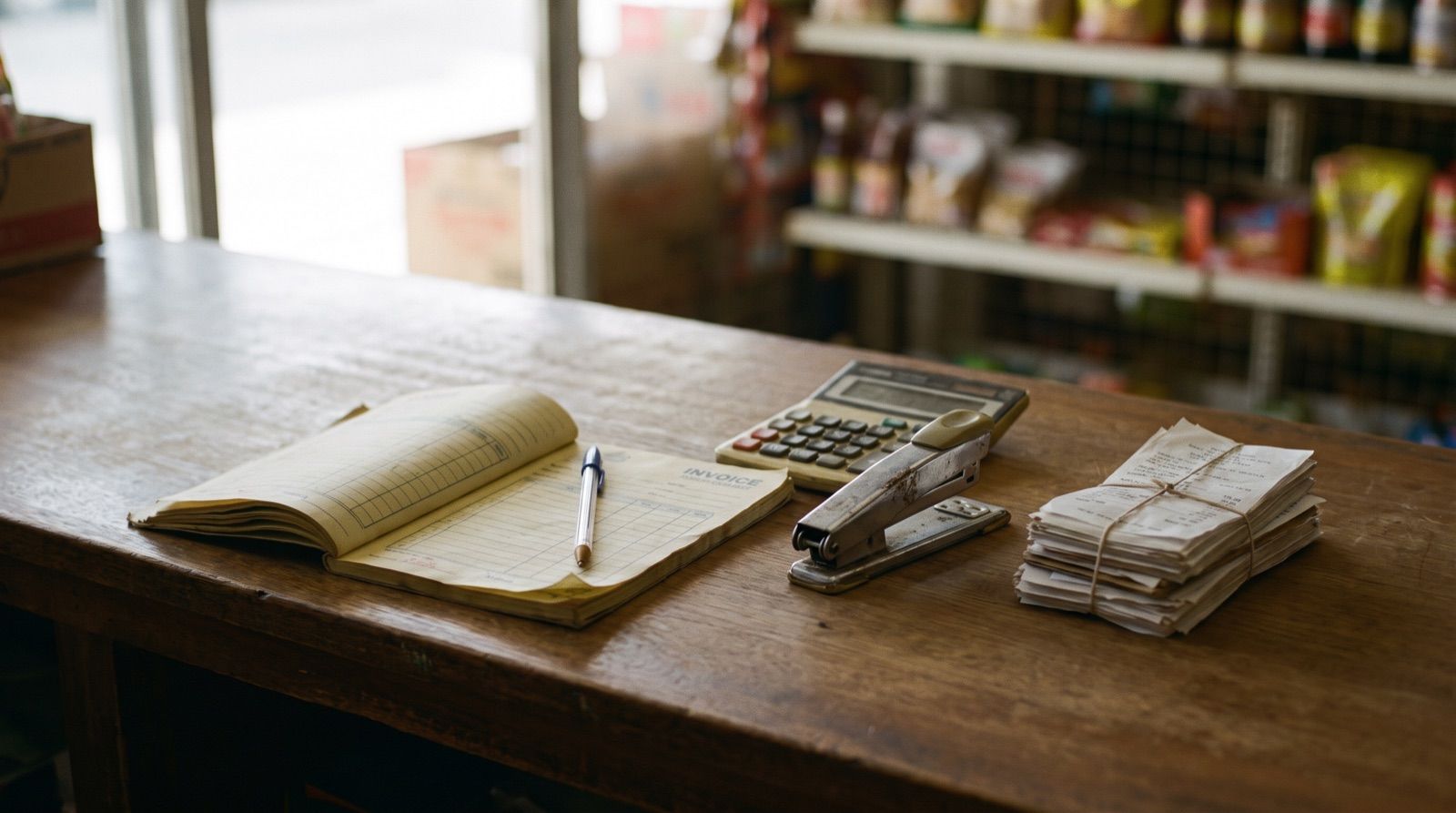
For decades the rule was simple: a sales invoice for goods, an official receipt for services. The Ease of Paying Taxes (EOPT) Act, Republic Act No. 11976, ended that split in 2024. The invoice is now the one primary document for every sale, goods or services, and the official receipt has been demoted to an optional acknowledgement of payment.
If you still have a drawer of printed official receipt booklets, you can keep using them. What changed is what the document is called, what it proves, and when you have to issue one.
The new rule in one table
| Before EOPT | Since 2024 | |
|---|---|---|
| Sale of goods | Sales invoice | Invoice |
| Sale of services | Official receipt | Invoice (service invoice or billing invoice) |
| Proof of payment | Official receipt | Optional: official receipt, collection receipt, or acknowledgement receipt |
| Document that supports a VAT input tax claim | Invoice for goods, OR for services | Invoice only |
| Minimum sale that needs a document | ₱100 | ₱500, adjusted for inflation every three years |
The invoice is issued when the sale is made, whether or not the customer has paid. For services that are billed first and paid later, you issue a billing invoice when you bill, and the eventual payment can be acknowledged with any supplementary receipt.
The practical consequence for your customers: a business buyer can only claim input VAT or deduct an expense with an invoice. An official receipt alone no longer supports the claim. If you are still handing clients an official receipt as the main document, they will start asking for an invoice.
What to do with unused official receipts
The transition rules are in RR No. 11-2024, clarified by RMC No. 77-2024. You have two choices:
Convert them into invoices. Strike out “Official Receipt” and stamp or write “Invoice” on each copy. Converted booklets can be used until they are fully consumed; the original December 31, 2024 cutoff was removed. The condition was that you reported your unused stock to your RDO (the inventory deadline was July 31, 2024, and submission by email was allowed). If you never filed that inventory, talk to your RDO before you keep issuing from the old booklets.
Keep them as supplementary receipts. Use them purely as proof of payment, with the phrase “THIS DOCUMENT IS NOT VALID FOR CLAIM OF INPUT TAX” on every page. You still need a separate invoice for each sale.
Either way, you don’t need a new Certificate of Registration. The BIR said the existing COR stays valid even if it still shows the old registration fee line.
When you must issue an invoice
| Situation | Invoice required? |
|---|---|
| Any sale of ₱500 or more | Yes |
| Sale below ₱500 | Only if the customer asks |
| VAT-registered seller to another VAT-registered buyer | Yes, regardless of amount |
| Sale to government | Yes |
| Several small sales to one customer in a day totalling ₱500 or more | Yes, one invoice at the end of the day covering them |
The invoice has to carry your registered name, TIN, address, the date, the customer’s details for sales to businesses, a description and quantity of what was sold, the amount, and the VAT breakdown if you are VAT-registered. The forms are printed by a BIR-accredited printer under an Authority to Print, or generated by a registered POS, cash register, or accounting system.
Electronic invoicing: who is covered and when
The next step is already scheduled. RR No. 11-2025 implements the CREATE MORE amendments to Sections 237 and 237-A of the Tax Code, which require electronic invoices and electronic sales reporting for a first group of taxpayers:
- businesses engaged in e-commerce or internet transactions (online sellers, marketplaces, digital services);
- taxpayers under the Large Taxpayers Service and large taxpayers under the EOPT classification;
- businesses using computerized accounting systems, computerized books with accounting records, or other invoicing software.
RR No. 26-2025 moved the compliance deadline to December 31, 2026, and RMC No. 98-2026, issued in September 2026, reiterated it. Covered businesses apply for a Permit to Issue electronic invoices and then complete Electronic Invoicing and Sales Reporting (EIS) certification within six months. Micro taxpayers, meaning gross sales below ₱3 million, are excluded from the mandate even if they sell online.
If you are a small online seller using a BIR-registered accounting system, read the “computerized accounting system” condition carefully: the system, not just your sales channel, can pull you into the first group.
A checklist for small businesses
- Check what you are issuing today. If your main document still says “Official Receipt” with no “Invoice” marking, convert it or order invoice booklets.
- Set the ₱500 rule at the counter. Train staff to issue an invoice at ₱500 and above without being asked.
- Keep the payment trail separate. For billed services, invoice first, then acknowledge payment. Don’t skip the invoice because the client paid immediately.
- Register your machines. POS and cash registers need BIR registration, and their receipts must carry invoice details.
- Know your taxpayer classification. If you sell online and your gross sales are at or above ₱3 million, or you use a computerized accounting system, plan for e-invoicing before December 31, 2026.
- Keep the documents. Invoices and their supporting records are kept for five years under the EOPT rules, the same retention period as your books of accounts.
Related reading
The invoicing change arrived alongside other EOPT updates: the removal of the ₱500 annual registration fee, the five-year record retention period, and “file and pay anywhere.” If you are VAT-registered or close to the threshold, our guide to percentage tax under Section 116 explains the ₱3 million line that also decides whether e-invoicing applies to you.
Questions and answers
Common questions
- Do service businesses still issue official receipts?
- No. Under the Ease of Paying Taxes Act, the invoice is the primary document for sales of goods and of services. An official receipt is now only a supplementary document that acknowledges payment. Service providers issue a service invoice (or a billing invoice followed by payment) instead of an official receipt.
- Can I still use my leftover official receipt booklets?
- Yes, in one of two ways. You can strike out the words Official Receipt, write Invoice, and keep using the booklet as your invoice until it runs out, as long as you reported the stock to your RDO. Or you can keep using them as supplementary receipts, with the phrase THIS DOCUMENT IS NOT VALID FOR CLAIM OF INPUT TAX stamped on each one. RR No. 11-2024 removed the original December 31, 2024 cutoff for converted booklets.
- What is the minimum sale that needs an invoice?
- Section 237 of the Tax Code, as amended by the EOPT Act, requires an invoice for every sale of goods or services worth ₱500 or more. Below that, you issue one only if the buyer asks, but VAT-registered sellers must still issue an invoice for every sale to another VAT-registered business regardless of amount. The threshold is adjusted for inflation every three years.
- Who has to switch to electronic invoicing?
- Under RR No. 11-2025, the first group covered by mandatory e-invoicing is taxpayers engaged in e-commerce or internet transactions, those under the Large Taxpayers Service, and businesses using computerized accounting systems or similar invoicing software. RR No. 26-2025 set the compliance deadline at December 31, 2026, and RMC No. 98-2026 confirmed it. Micro taxpayers are excluded.
- Is a cash register or POS receipt an invoice?
- Only if the machine is BIR-registered and its receipt carries the required invoice details. A registered POS prints an invoice, not a receipt, and the tape from an unregistered machine is not a valid BIR document.
Keep the next filing easier to find
Tamoogi keeps the task, due date, and supporting documents together for every business you manage.
Start a 30-day free trial